[ad_1]
Lebanon will only take part in talks with Israel if a ceasefire is already in place, a senior official tells the BBC.
[ad_2]
Source link
Author: admin72
-
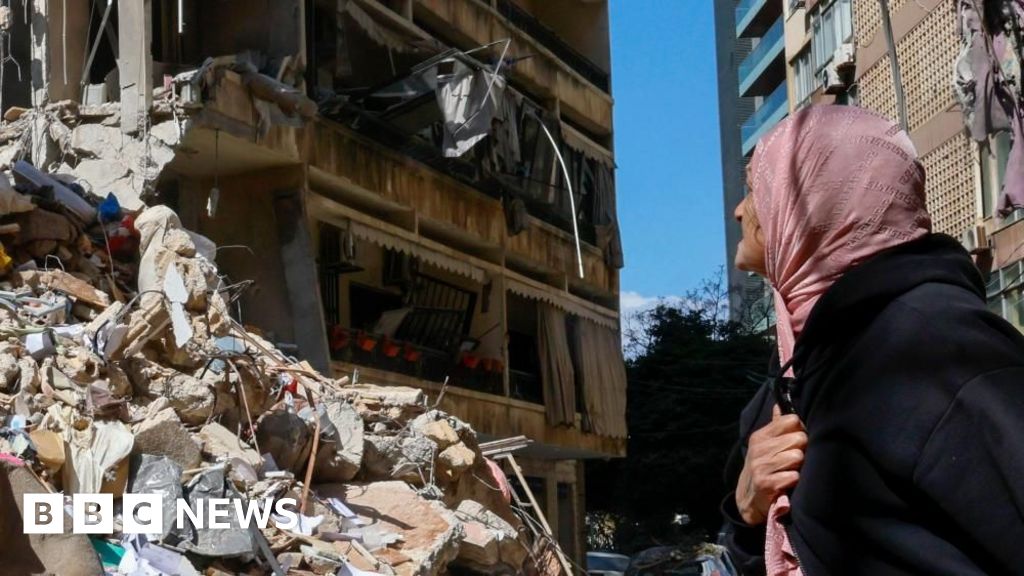
Lebanon says ceasefire must be in place before Israel talks
-

Prince Harry sued for defamation by charity Sentebale he co-founded
[ad_1]
“Sentebale’s problems played out in the public eye, enabling a damaging dispute to harm the charity’s reputation, risk overshadowing its many achievements, and jeopardising the charity’s ability to deliver for the very beneficiaries it was created to serve,” said Charity Commission chief executive David Holdsworth.
[ad_2]
Source link -

Palestinian shot dead during Israeli settler attack on occupied West Bank village
[ad_1]
The killing came as ex-security chiefs warned “government sponsored Jewish terrorism” was out of control.
[ad_2]
Source link -
Man accused of coercing wife into sex with 120 men goes on trial in Sweden
[ad_1]
The 61-year-old denies threatening physical violence and plying his wife with drugs to force her into having sex with strangers.
[ad_2]
Source link -

European defense stocks slide on Ukraine-Russia deal progress reports
[ad_1]
The Euronext NV stock exchange in Paris.
Nathan Laine | Bloomberg | Getty Images
Shares in Europe closed higher on Friday afternoon as investors weighed the fragile ceasefire between the U.S. and Iran, and the potential for successful peace negotiations in Ukraine.
The pan-European Stoxx 600 index ended the session 0.4% higher, with most regional sectors and all major bourses closing in positive territory.
European defense stocks fell sharply after Ukraine’s senior negotiator with Russia signaled that a resolution to the conflict could be in sight.
Rheinmetall, Germany’s largest arms maker, finished the day 5.9% lower, while tank manufacturer Renk was 3.9% lower and Hensoldt, the military tech and surveillance specialist, closed down 5.9%. Other defense stocks in the red included Swedish fighter jet maker Saab, which dipped 2.2%, and the U.K.’s BAE Systems, which closed the session 3.3% lower.
Kyrylo Budanov, a former military spy and one of Ukrainian president Volodymyr Zelenskiy’s key aides, expressed optimism that negotiations could be nearing a settlement, according to a Bloomberg report Friday.
On Thursday, Israeli Prime Minister Benjamin Netanyahu said that the country had agreed to negotiate with Lebanon “as soon as possible.” Tehran’s parliamentary speaker Mohammad Bagher Ghalibaf cited Israel’s continued attacks on Lebanon as a violation of the ceasefire agreement between the U.S. and Iran.
Asian markets rose overnight following the news, with South Korea’s Kospi advancing 1.75%, while the small-cap Kosdaq was 1.65% higher.
Japan’s Nikkei 225 gained 1.88%, while the Topix was flat. Japanese Prime Minister Sanae Takaichi said Friday that the country plans to release 20 days’ worth of oil reserves from May onwards, Reuters reported. Japan had enough oil reserves for 230 days as of April 6.
German inflation accelerated to 2.8% in March, according to data released Friday, confirming provisional results.
“The significant increase in the prices of energy products is driving up inflation,” said Ruth Brand, President of the Federal Statistical Office. “In particular, motor fuel and heating oil prices have risen sharply for consumers since the start of the Iran war.”
In the U.S., meanwhile, the latest consumer price index print rose 0.9% for the month of March, which pushed the annual CPI inflation rate to 3.3%, driven by the jump in oil prices.
On Wall Street, the S&P 500 edged slightly lower, with the Nasdaq gaining 0.4%, while the Dow Jones Industrial Average fell 0.4% in morning trade.
— CNBC’s Lisa Kailai Han and Justina Lee also contributed to this report.
[ad_2]
Source link -
Airports could face a jet fuel crunch within 3 weeks, industry warns
[ad_1]
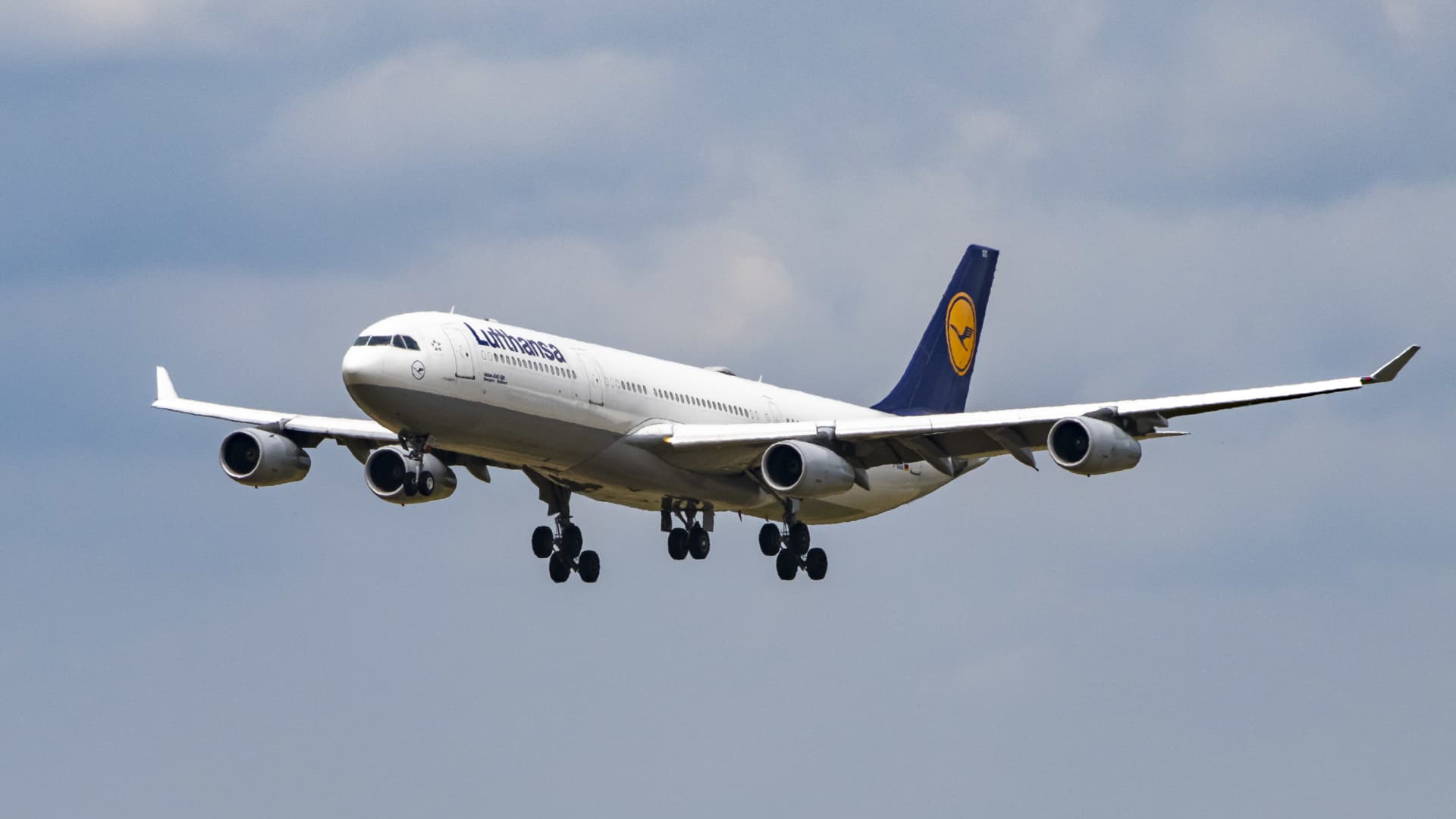
Lufthansa Airbus A340 passenger aircraft as seen landing at Eindhoven Airport EIN during a rare charter flight, arriving from Athens, Greece.
Nicholas Economou | Nurphoto | Getty Images
Europe’s airport industry has warned that jet fuel shortages could hit within three weeks, disrupting summer travel and “significantly” harming the European economy.
ACI Europe, which represents airports across the European Union, said on Thursday that a supply crunch would derail airport operations and air connectivity.
In a letter to the EU Commissioner for Sustainable Transport and Tourism Apostolos Tzitzikostas, shared with CNBC, the industry body warned of the “harsh economic impacts” fuel shortages would have on the European economy.
“At this stage, we understand that if the passage through the Strait of Hormuz does not resume in any significant and stable way within the next three weeks, systemic jet fuel shortage is set to become a reality for the EU,” the letter said.
ACI Europe said potential shortages are particularly worrisome ahead of the “peak summer season”, when many EU member states rely on the economic boost from increased air travel. Air connectivity generates 851 billion euros (nearly $1 trillion) in GDP for European economies and supports 14 million jobs, according to the group.
“As a result, it is essential that the EU prioritizes the availability and stable supply of jet fuel as part of its response to the oil and energy crisis triggered by the conflict in the Middle East,” it added.

The U.S. and Israel’s war with Iran, which began on February 28, brought traffic through the Strait of Hormuz to an effective halt, sending oil prices above $100 a barrel and pushing energy costs higher.
Airlines were immediately impacted by soaring jet fuel prices, up 103% month-on-month as of March, according to the International Air Transport Association.
The price of jet fuel in the U.S. roughly doubled, increasing from $2.50 a gallon on Feb. 27 to $4.88 a gallon on April 2.
The U.S. reached a two-week ceasefire agreement with Iran on Tuesday in exchange for Tehran allowing vessels to pass through the Strait of Hormuz, but the vital passageway remains effectively closed. Around 20% of the world’s oil passed through the Strait before the war started.
U.S. West Texas Intermediate crude was last up 0.4% to $98.27 per barrel after passing $100 earlier in the session, while Brent crude was nearly flat at $96.02 per barrel.
Airlines are implementing several measures to address rising jet fuel costs. Lufthansa’s CEO Carsten Spohr told employees last week that the German carrier is forming teams to create contingency plans due to the Middle East war. This could include grounding some of its aircraft.
Scandinavian airline SAS is cancelling 1,000 flights in April, while Ryanair’s CEO Michael O’Leary said the Irish carrier would have to look at cancelling some flights and reducing capacity over the summer if the fuel shortage continues.
[ad_2]
Source link -
Iran attacks on crucial Saudi pipeline and production facilities slash kingdom’s oil output
[ad_1]

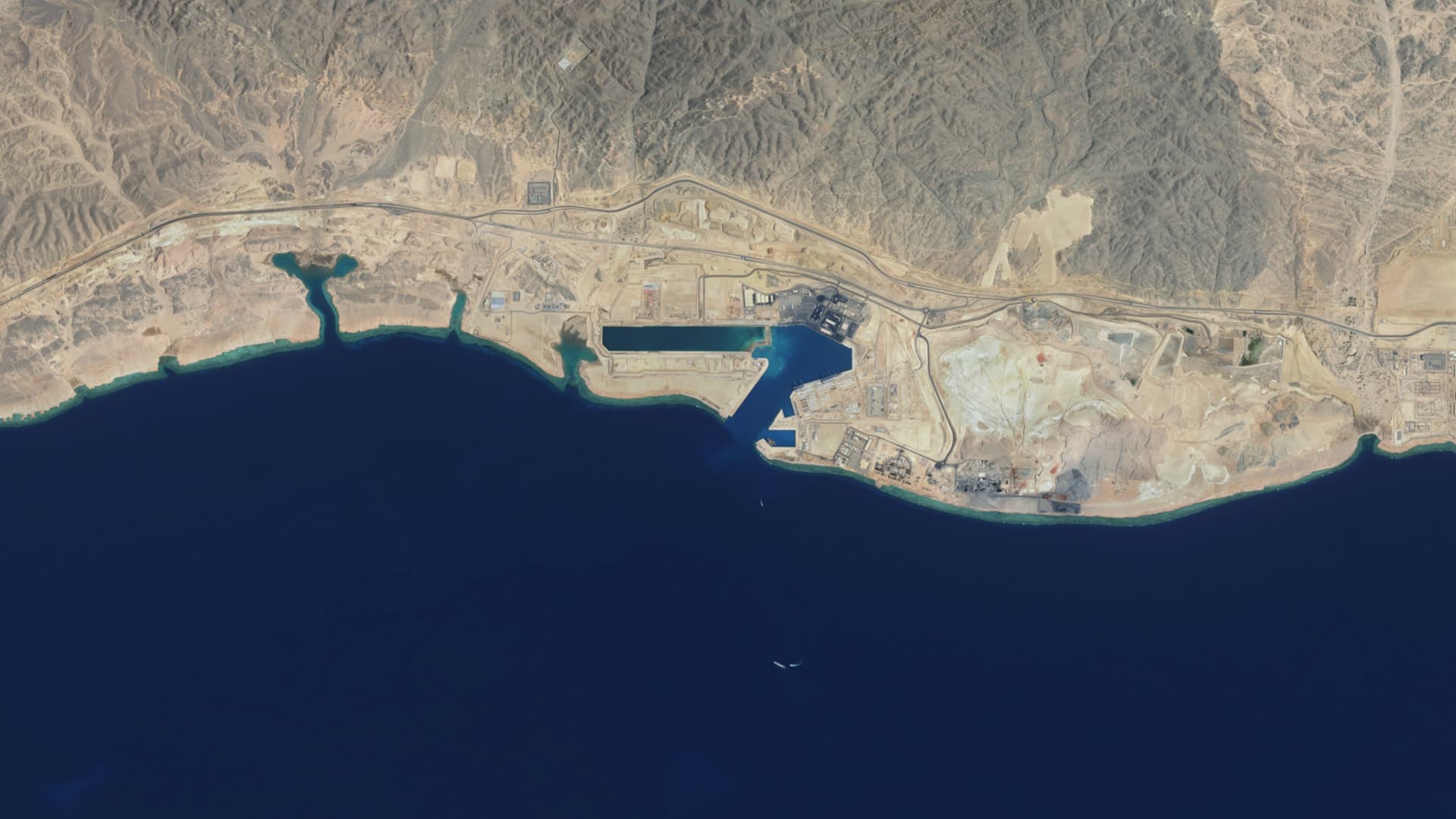
Saudi Arabia’s critical pipeline to the Red Sea suffered a recent attack from Iran, cutting throughput by 700,000 barrels per day.
The attack hit a pumping station on the East-West pipeline, according to a state news agency report. This pipeline brings crude oil from processing facilities near the Persian Gulf to an export terminal on the Red Sea called Yanbu.
The Saudis have relied on the pipeline, which has a capacity of 7 million bpd, as their main way to export crude oil during the Iran war. Riyadh cannot export through the Strait of Hormuz due to Iranian attacks.
Attacks on Saudi’s Manifa and Khurais production facilities have slashed the kingdom’s output by 600,000 bpd, according to the Saudi Press Agency report. Several refineries have also been attacked.
The damage to Saudi energy infrastructure will only compound the massive disruption to global oil supplies triggered by Iran’s attacks on tankers in the Strait of Hormuz.
The U.S. agreed to a two-week ceasefire on Tuesday in exchange for Iran allowing ships to pass through the strait. But the CEO of the United Arab Emirate’s state-owned oil company said Thursday that the strait remains effectively closed to traffic.
Iran has made clear that ships must obtain its permission to pass through the strait, said Sultan Ahmed Al Jaber, CEO of Abu Dhabi National Oil Co.
“This moment requires clarity,” Al Jaber said in a social media post. “So let’s be clear: the Strait of Hormuz is not open. Access is being restricted, conditioned and controlled.”
The strait connects Gulf oil producers like Saudi Arabia and the UAE to global markets. About 20% of global oil supplies passed through the waterway before the U.S. and Israel attacked Iran on Feb. 28.
Gulf oil producers have shut down about 13 million bpd of production due to the disruption in the strait, said Matt Smith, an oil analyst at Kpler, in an interview with CNBC on Thursday.
[ad_2]
Source link -

BBC at the site of Israeli air strikes in Beirut
[ad_1]
On Wednesday, Lebanon was hit with the heaviest bombardment by Israel in this conflict.
For 10 minutes, the country was under heavy attack, with Israel saying it struck Lebanon around 100 times.
At least 182 people have been killed and more than 800 wounded, according to Lebanon’s health ministry.
The BBC’s Middle East Correspondent Hugo Bachega was in Beirut at the site of one of these deadly strikes.
[ad_2]
Source link -

German transgender far-right extremist arrested in Czech Republic
[ad_1]
German media reports say Marla-Svenja Liebich used to be a member of a neo-Nazi group called Blood and Honour.
[ad_2]
Source link -
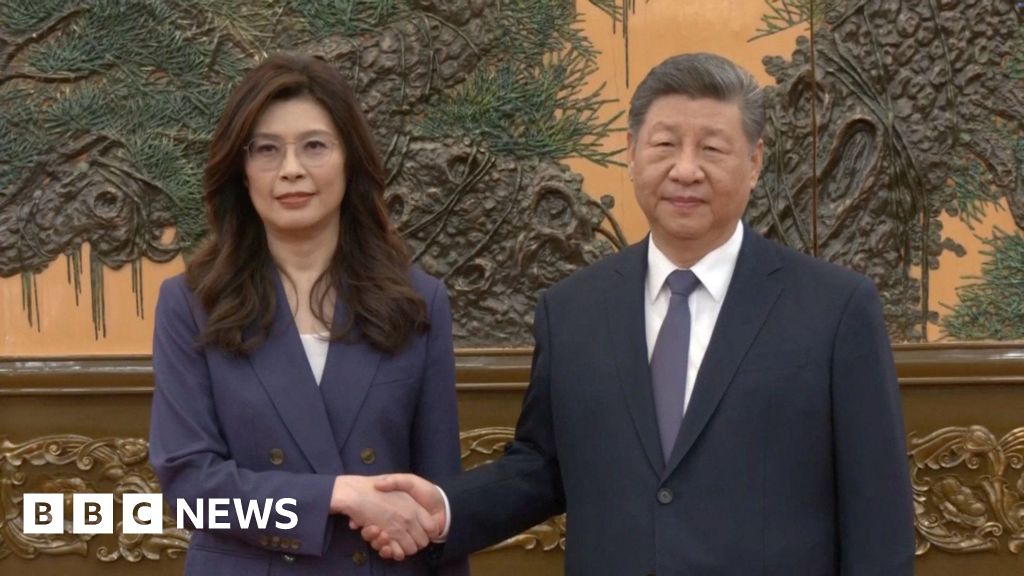
Taiwan opposition leader meets Xi Jinping in Beijing
[ad_1]
In 2016, Beijing cut off high-level communications with Taiwan after the ruling Democratic Progressive Party’s (DPP) Tsai Ing-wen became president, citing her refusal to endorse the concept of a single Chinese nation. The DPP is among those who have criticised Cheng’s trip, accusing her of being “subservient” to Beijing.
[ad_2]
Source link